
Crude oil is a valuable resource, and it’s important to make sure that it’s transported safely and securely. In this blog post, we will discuss everything you need to know about crude oil transfer. We’ll cover the basics, such as what crude oil is and how it’s transported, and we’ll also go in-depth into the equipment you need for a successful transfer. So whether you’re an experienced professional or just starting out in the industry, read on for all the information you need!
What is crude oil?
Crude oil is a natural, unrefined petroleum product. It’s a mixture of hydrocarbons or molecules that contain both carbon and hydrogen atoms. Crude oil is found underground and is extracted through drilling. Once it’s been extracted, it needs to be transported to refineries where it can be processed into useful products like gasoline, diesel, and jet fuel.
Molecular stricture of crude oil:
Crude oil is made up of hydrocarbons, which are molecules that contain both carbon and hydrogen atoms. The simplest type of hydrocarbon is methane (CH₄), which has one carbon atom and four hydrogen atoms. Crude oil is a mixture of different hydrocarbons, including methane, ethane (C₂H₆), propane (C₃H₈), and butane (C₄H₁₀).
What products does crude oil make?
Crude oil can be refined into a variety of products, the most common of which are gasoline, diesel, and jet fuel. Gasoline is used to power cars and trucks, while diesel is used to power buses, trains, and ships. Jet fuel is used to power airplanes. Other products that can be made from crude oil include plastics, chemicals, and asphalt.
How is crude oil transported?
Crude oil is transported via pipelines, tankers, barges, and railcars. The most common method of transportation is through pipelines, as they are the most efficient and cost-effective option. Tankers and barges are typically used to transport crude oil over long distances, while railcars are used to transport it over shorter distances.
What equipment do you need for crude oil transfer?
The most important piece of equipment for crude oil transfer is the breakaway coupling. This device is designed to prevent leaks and spills by breaking away from the pipe if there is too much pressure. It’s also important to have a good quality pump so that you can move the oil quickly and efficiently. Finally, you’ll need some hose to connect the pump to the pipe.
What is a breakaway coupling?

A breakaway coupling is a device that is used to prevent leaks and spills by breaking away from the pipe if there is too much pressure. It’s an important piece of equipment for crude oil transfer because it can help to prevent a disaster.
How does a breakaway coupling work?
A breakaway coupling consists of two parts, the body, and the retainer. The body is attached to the pipe, and the retainer is attached to the pump. If there is too much pressure in the pipe, the body will break away from the pipe and release the oil. The retainer will then catch the body and prevent it from leaking.
Types of Breakaway Coupling:
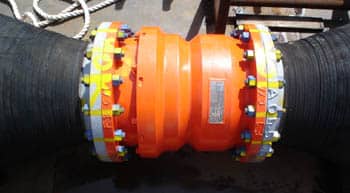
There are two main types of breakaway coupling, single-use, and multi-use. Single-use couplings are designed to be used once and then disposed of, while multi-use couplings can be reused. Single-use couplings are typically made of plastic, while multi-use couplings are usually made of metal.
Why do you need a breakaway coupling?
A breakaway coupling is an important safety device that can help to prevent leaks and spills. It’s especially important in the crude oil industry because of the potential for disaster if there is a leak or spill.
What are some other safety devices you might need?
In addition to a breakaway coupling, you might also need a valve to control the flow of oil, and you might need a check valve to prevent backflow. You might also need an isolation valve to isolate the pump from the rest of the system.
What is an isolation valve?
An isolation valve is a device that is used to isolate the pump from the rest of the system. This is important because it can help to prevent a leak or spill from happening.
What are some other benefits of using an isolation valve?
An isolation valve can also help to improve the efficiency of the system by allowing you to control the flow of oil. It can also help to reduce wear and tear on the pump.
Why is it important to have a good quality pump?
A good quality pump is important because it can help to improve the efficiency of the system and reduce wear and tear. It’s also important because it can help to prevent leaks and spills.
What are some other benefits of using a good quality pump?
A good quality pump can also help to improve the life of your equipment and reduce maintenance costs.
What are some things you should consider when choosing a pump?
When choosing a pump, you should consider the flow rate, the pressure, the power, and the portability. You should also consider the warranty and the price.
What is the flow rate?
The flow rate is the amount of oil that the pump can move in a given period of time.
What is the pressure?
The pressure is the amount of force that the pump can generate.
What is power?
The power is the amount of energy that the pump uses.
What is portability?
The portability is the ability of the pump to be moved from one location to another.
Why do you need this equipment?
The breakaway coupling is the most important piece of equipment because it prevents leaks and spills. The pump is important because it allows you to move the oil quickly and efficiently. The hose is important because it connects the pump to the pipe.
Now that you know everything you need to know about crude oil transfer, you’re ready to get started!


