

Introduction to TUPE Transfer
Are you aware of your employment rights when your company is undergoing a transfer or change of service provider? The legal landscape may seem like a labyrinth, but there’s a beacon of clarity you should know about: the TUPE Transfer. This piece of legislation is your hidden armor, safeguarding your employment rights during a business transition. In this comprehensive guide, we’ll unmask the TUPE Transfer, shedding light on its mechanisms and how it upholds your work entitlements.
TUPE, or Transfer of Undertakings (Protection of Employment), is a UK regulation that protects employees when the organisation they work for, or part of it, changes hands. It applies in scenarios such as when an organisation is transferred from one employer to another or when a service is transferred to a new provider, like in the case of a cleaning contract switching companies.
Whether you’re moving with your current job to a new employer, staying put while others move, or welcoming transferred employees to your organisation, the TUPE regulations have got you covered. However, to effectively leverage these protections, you need to understand what they entail and how they affect you. This guide is your trusted companion, helping you navigate the legal intricacies of TUPE Transfers, from the basic understanding to the scope of the regulation, the process, your rights, and how employers should handle a TUPE transfer. Stay tuned and empower yourself with the knowledge you need to protect your employment rights under a TUPE transfer.
Understanding TUPE: The Basics
Ever wondered what TUPE stands for? Or why it’s so crucial in the legal sphere of employment? Well, it’s time to dive into the basics of TUPE, the hidden gem of employment legislation that could be your lifesaver in times of organisational changes.
What Does TUPE Stand For?
TUPE is a powerful acronym that stands for the Transfer of Undertakings (Protection of Employment) Regulations. Despite its somewhat complex name, its purpose is straightforward and employee-centric. It’s essentially a set of regulations designed to protect employees’ rights when the organisation they work for changes hands.
The Purpose of TUPE
The core intent of TUPE is to ensure that employees are not adversely affected when a business is transferred to a new owner. This includes scenarios where an organisation, or part of it, is transferred from one employer to another or when a service is transferred to a new provider. For instance, consider a scenario where another company takes over the contract for office cleaning. TUPE ensures that the rights of the employees involved in the transfer are protected, making it a vital part of UK employment law.
The History of TUPE Regulations
The TUPE regulations are not a recent development. In fact, they are the United Kingdom’s implementation of the European Union Business Transfers Directive. This directive was established with the principle that employees should not lose any of their existing employment rights when their place of work changes hands. Over the years, the TUPE regulations have been updated and expanded to cover a wider range of scenarios, including public sector transfers, making them a robust protective measure for employees.
In the next section, we will explore who and what is covered by TUPE. So, keep reading to further unmask the mysteries of TUPE transfers and fully understand your hidden employment rights.
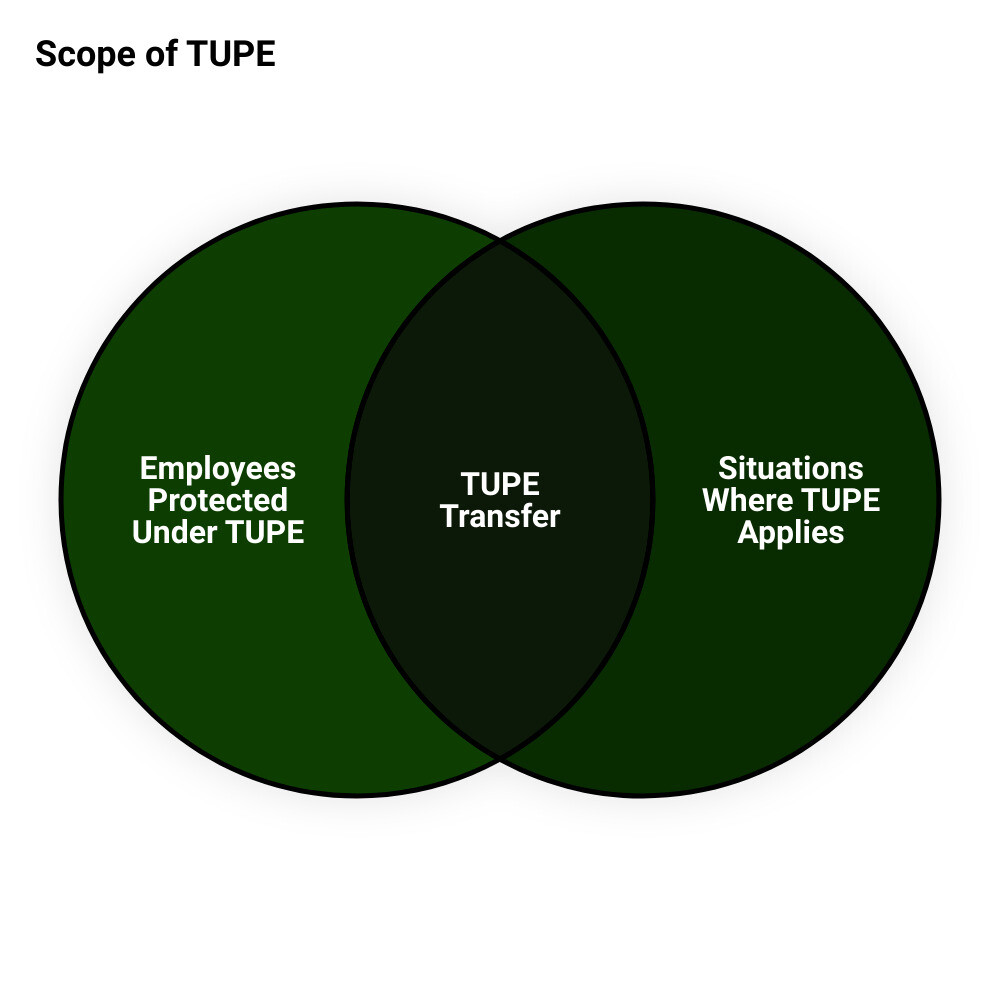
The Scope of TUPE: Who and What is Covered?
Your employment rights under the Transfer of Undertakings (Protection of Employment) regulations, better known as TUPE, are quite extensive. But who exactly do these rights protect and when do they apply? And, are they applicable beyond the shores of the United Kingdom, say in the United States? Let’s delve into these questions to help you better understand the breadth and depth of TUPE.
Who is Protected Under TUPE?
TUPE protects an array of employees. If you’re employed by a business that is changing hands, TUPE is there to ensure that your rights and conditions of employment are safeguarded. This protection is in place whether you work full-time, part-time, or on a fixed-term contract. The umbrella of TUPE also extends over those who are classified as employees under the law, which can include some types of contractors.
However, note that self-employed workers and those on temporary work agency contracts generally fall outside the scope of TUPE regulations. Hence, it’s crucial to understand your status under the law to know whether you’re within the protective ambit of TUPE or not.
When Does TUPE Apply?
For TUPE to apply, there must be what is referred to as a “relevant transfer.” This typically happens when a business or part of a business moves to a new owner or merges with another business to form a new entity. TUPE can also apply when a service provision changes, such as when a contract for work is moved from one contractor to another.
A relevant transfer could involve the selling or buying part of a business, outsourcing or insourcing of services, or the granting or taking over of a lease or license of premises and operating the same business from those premises. The key factor is that the business entity should retain its identity after the transfer.
Keep in mind, the question of when TUPE applies can be complex. If you suspect that a transaction you are involved in might be covered by TUPE, it’s always best to seek legal advice.
Does TUPE Apply in the USA?
The short answer is no, TUPE is a UK-specific set of regulations and does not have an equivalent in the United States. This means that the protections and obligations provided by TUPE are not directly applicable to employment and immigration laws in the US. While the US has its own set of employment laws and regulations, the concept of employee rights being automatically transferred from one employer to another in the event of a business transfer is not recognized in the same way as it is in the UK.
So, while the scope of TUPE is broad regarding the types of employees it covers and the situations in which it applies, its geographical scope is limited to the United Kingdom.
Understanding the scope of TUPE is a vital step in the process of unmasking your hidden employment rights. In the next section, we will delve deeper into the process of a TUPE transfer. Stay tuned to learn more about how to navigate this potentially complex landscape.
The Process of a TUPE Transfer
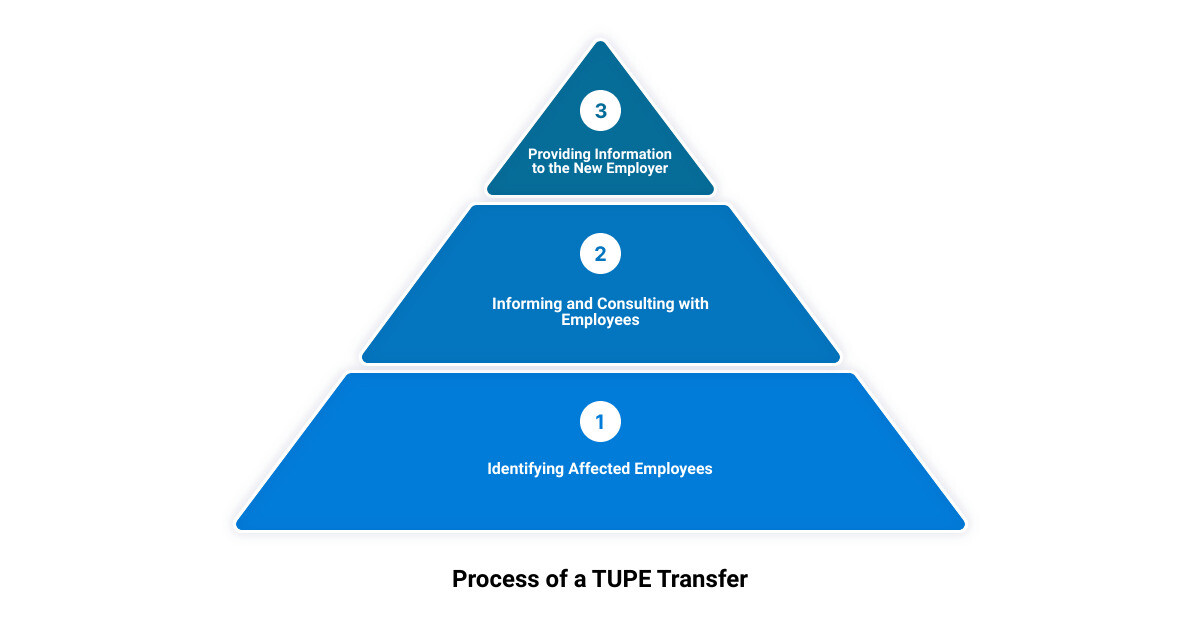
Unravelling the complexities of the TUPE transfer process can feel like peeling back the layers of an onion, with each layer holding new and vital information. However, don’t be daunted. The key stages of a TUPE transfer, ensuring you’re well-equipped to navigate this pivotal point in your employment journey.
Identifying Affected Employees
A TUPE transfer isn’t a one-size-fits-all process, and the first step is identifying which employees will be affected. Known as the “wholly or mainly assigned” test, this process assesses the extent to which an employee’s duties and time are tied to the transferring undertaking or activities. This test has been shaped by case law over time, including a landmark decision in 2021 which confirmed that it may be possible to transfer only part of an employee’s employment when their working time is split. Understanding whether you fall into this category is a critical first step in the TUPE transfer process.
Informing and Consulting with Employees
Open lines of communication are the lifeblood of a smooth TUPE transfer process. Both the outgoing and incoming employers have a responsibility to inform and consult with affected employees. This includes unveiling any proposed changes or “measures” following the transfer. The timing of this consultation is crucial—it must take place “in good time” before the transfer. In larger transactions involving numerous staff, a more extended timetable may be necessary. Failure to adhere to these obligations can lead to a complaint to the Employment Tribunal and potential compensation awarded to the affected employees, highlighting the importance of this step in the TUPE transfer process.
Providing Information to the New Employer
Transparency is key in a TUPE transfer. The outgoing employer has a duty to provide the incoming employer with written details of the transferring employees. This includes their identity, age, employment particulars, disciplinary and grievance records, employee claims, and collective agreements, alongside all associated rights and liabilities that will transfer. This information must be given no less than 28 days before the transfer, allowing the new employer to fully understand the implications of the transfer and the responsibilities they are inheriting.
The process of a TUPE transfer might seem complex, but understanding these vital stages can help demystify the process, empowering you to navigate your employment journey with confidence and clarity. The key is to stay informed, ask questions where necessary, and seek legal advice to ensure your rights are protected.
Your Rights Under TUPE Transfer
As an employee, you may feel uncertain and anxious when your workplace undergoes changes. However, it’s essential to know that the Transfer of Undertakings (Protection of Employment) regulations, or TUPE, are there to secure your employment rights during such transitions. This section will delve into the specific rights you have under TUPE, helping you to navigate these changes with confidence and clarity.
Protection from Changes to Your Terms
One of your most significant protections under TUPE is the safeguard against alterations to your employment terms due to the transfer. If your workplace is undergoing a TUPE transfer, your new employer cannot change your contractual terms for a reason related to the transfer. This protection is indefinite, meaning that it doesn’t just apply in the immediate aftermath of a TUPE transfer; it lasts for as long as you remain in the job.
However, keep in mind that changes unrelated to the transfer are not prevented by TUPE regulations. If there’s a valid economic, technical, or organisational reason requiring changes in the workforce, your employer can propose alterations to your contract.
The Right to Refuse to Transfer
Another crucial right under TUPE is the right to refuse to transfer to the new employer. This is known as “objecting to the transfer,” and it effectively terminates your contract, meaning you’ll not be employed by the new or old employer. However, this doesn’t amount to unfair dismissal and you won’t generally be entitled to any compensation. Therefore, refusing a transfer is a serious decision that should be considered carefully.
What are Measures in a TUPE Transfer?
The term “measures” in a TUPE transfer refers to any intended changes that the new employer plans to make in relation to transferring employees. These measures could be changes to contractual and non-contractual terms and conditions. They could also include changes that might occur before the transfer, such as a redundancy exercise or administrative changes like adjustments to payroll arrangements.
Under TUPE regulations, your employer is obliged to inform you about these measures. If these measures could significantly affect you, your employer has a duty to consult with you or your representative.
Understanding your rights under a TUPE transfer can help you feel more secure and in control during workplace transitions. Remember, Face 2 Face Solicitors are always here to provide expert advice and guidance during such times, ensuring your employment rights are upheld every step of the way.
How Employers Should Handle a TUPE Transfer
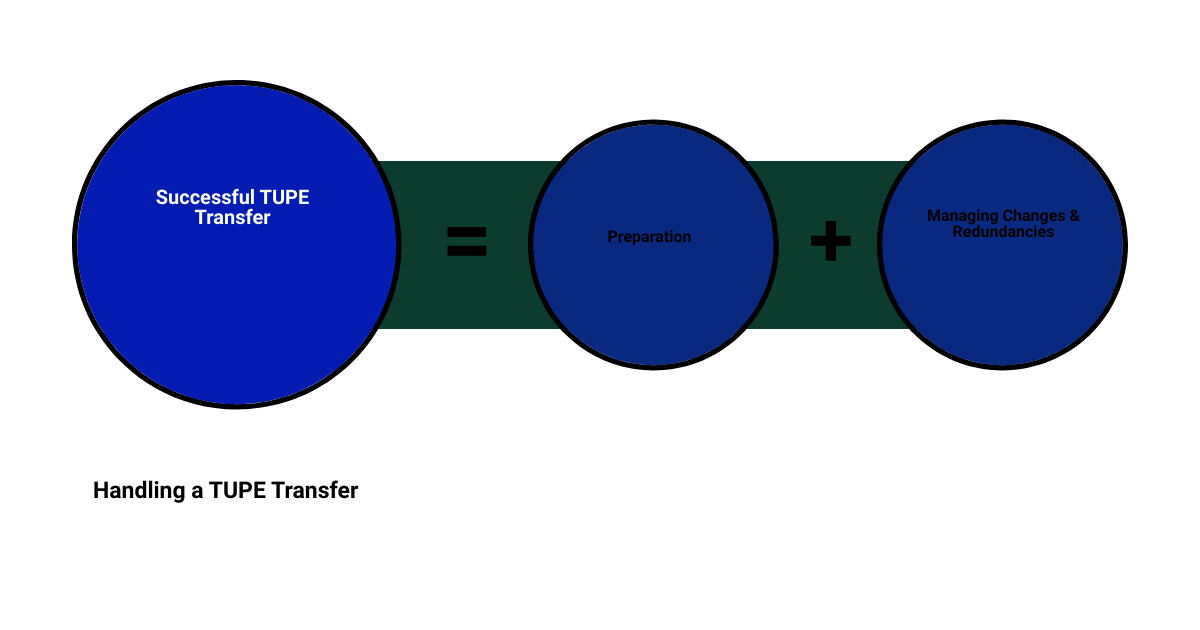
Transitioning the undertaking of a business, whether it’s a whole organization or just a service, to a new employer can be a complex process. It’s crucial for the employers involved to handle the Transfer of Undertakings (Protection of Employment) Regulations 2006, or TUPE transfer, properly to safeguard the rights of their employees, avoid legal complications, and ensure a smooth and successful transition.
Preparing for a TUPE Transfer
The first step to a successful TUPE transfer begins with proper preparation. As an employer, you need to accurately identify the employees who will be affected by the transfer. This includes those who are part of the undertaking that is transferring or those who are part of an organized group of employees whose primary purpose is carrying out the relevant activities on behalf of the client.
Once the affected employees are identified, the next step involves informing and consulting with them. This can either be done directly or through their representatives. It is important to ensure that employees are well-informed about the impending transfer, its implications, and any measures that the new employer intends to take concerning them.
Changing Employee Contracts After a TUPE Transfer
Under TUPE regulations, an employee’s contract cannot be changed to their detriment simply because of the transfer. However, changes may be possible if there is an economical, technical, or organisational (ETO) reason entailing changes in the workforce. If a change is necessary, employers must inform and consult with the affected employees or their representatives.
Managing Redundancies Related to a TUPE Transfer
TUPE regulations provide protection for employees against dismissals that are solely or mainly because of the transfer. However, if there is a need for redundancies after the transfer, they must be handled carefully and in compliance with the law. Redundancies can only be made if there is an ETO reason, and the normal redundancy consultation process must be followed.
Dealing with TUPE Transfer in Case of Insolvency
In the unfortunate event that the outgoing employer is insolvent, TUPE regulations are relaxed to protect the incoming employer. The liability for redundancy, notice, and some other payments to employees will not transfer to the incoming employer. Terms and conditions of employment can be changed if it is agreed with the trade union or employee representatives, and if the change is designed to save a failing business. This encourages companies to “rescue” insolvent businesses and safeguard employment.
The proper handling of a TUPE transfer by employers is paramount to ensure the rights of employees are protected.
Conclusion: Navigating Your Employment Rights Under TUPE Transfer
In the intricate labyrinth of employment law, understanding your rights under a TUPE transfer can be like finding a needle in a haystack. Yet, it’s a crucial part of ensuring fair treatment as an employee, especially when your employment contract is transferred to a new employer or service provider.
The Transfer of Undertakings (Protection of Employment) or TUPE regulations were designed to safeguard your employment rights during such transitions. Whether you’re part of a large organisation or a small shop, TUPE is there to protect you, regardless of the size of your workplace.
Under TUPE, your employment terms and conditions are preserved, and any changes require careful handling to remain lawful. You also have the right to refuse to transfer, and any dismissals connected to the transfer must be justifiable to be deemed fair.
Yet, the process can be complex and fraught with legal nuances. It’s a dance that requires an expert guide to navigate.
The road to understanding and asserting your TUPE transfer rights may be challenging, but you don’t have to walk it alone. With our expert guidance and unwavering commitment to defending your rights, we’ll help you successfully navigate this aspect of employment law.
Remember, when it comes to your employment rights under a TUPE transfer, the devil is in the details, and knowledge is power. Don’t let legal complexities trip you up.


